
A Breakdown of Business General Liability Insurance in 2025: Trends, Impacts, and Innovations
Share this:
Exploring A Breakdown of Business General Liability Insurance in 2025, this introduction aims to provide a comprehensive look at the evolving landscape of insurance for businesses. From emerging trends to technological advancements, this overview sets the stage for a deep dive into the subject matter.
As we delve further, we will uncover the various facets that shape the future of business general liability insurance, offering insights into key developments and considerations for businesses in the coming years.
Overview of Business General Liability Insurance
Business General Liability Insurance is a crucial type of coverage that protects businesses from financial losses resulting from claims of injury or damage caused to others while conducting business operations.
Purpose of General Liability Insurance
General liability insurance serves as a safety net for businesses by providing coverage for legal costs, medical expenses, and damages resulting from third-party claims of bodily injury, property damage, or advertising injury.
Coverage Provided by General Liability Insurance
- Protection against bodily injuries: General liability insurance covers medical expenses if someone is injured on the business premises.
- Protection against property damage: It covers the costs of repairing or replacing property that is damaged due to the business operations.
- Advertising injury coverage: This includes claims of slander, libel, copyright infringement, or false advertising.
- Legal defense costs: The policy helps cover legal fees, court costs, and settlements in case of lawsuits.
Importance of Having General Liability Insurance for Businesses
Having general liability insurance is essential for businesses to protect their assets and reputation. It provides financial security and peace of mind by covering unexpected expenses related to lawsuits or claims. Additionally, many clients and partners may require proof of general liability insurance before entering into contracts, making it a vital component of risk management for businesses.
Trends and Changes in Business General Liability Insurance by 2025
In the ever-evolving landscape of the business insurance industry, several trends and changes are shaping the future of general liability insurance. Technology, market demands, and regulatory shifts are influencing the way insurance companies approach coverage and policies.
Technology Integration in Claims Processing
With advancements in artificial intelligence and data analytics, insurance companies are streamlining claims processing and risk assessment. By leveraging technology, insurers can better evaluate risks, detect fraud, and provide more accurate pricing for policies.
Rise of Cyber Liability Insurance
As businesses increasingly rely on digital platforms and data storage, the need for cyber liability insurance is growing. By 2025, we can expect to see a significant increase in the demand for coverage against cyber threats, data breaches, and other digital risks.
Customized Policies for Small Businesses
In response to the unique needs of small businesses, insurers are offering more tailored policies that cater to specific industries and risks. By 2025, we may see a rise in customizable general liability insurance packages designed to meet the needs of small businesses.
Shift Towards Sustainable Practices
With a growing focus on sustainability and environmental responsibility, insurance companies are reevaluating their coverage options to incorporate green practices. By 2025, we can anticipate more environmentally-friendly policies that incentivize businesses to adopt sustainable practices.
Collaboration with Insurtech Startups
Insurtech startups are disrupting the traditional insurance industry by offering innovative solutions for coverage and policy management. By partnering with these startups, established insurers can stay ahead of the curve and adapt to the changing demands of the market.
Impact of Economic Factors on Business General Liability Insurance
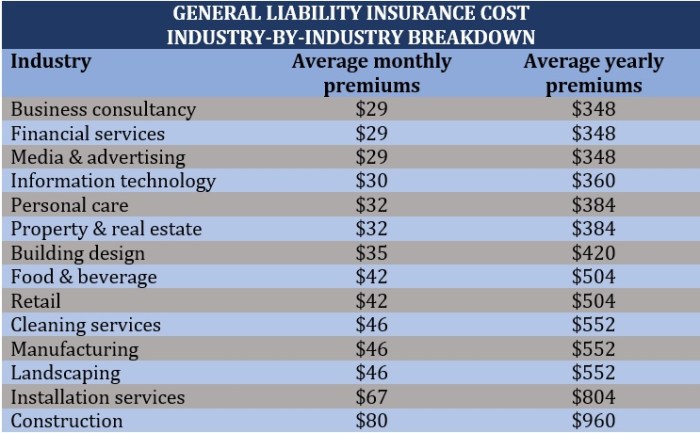
In the world of business general liability insurance, economic factors play a significant role in determining premiums and costs. Let's delve into how economic conditions can influence insurance costs and what strategies businesses can implement to mitigate financial risks related to insurance.
Influence of Economic Conditions on Insurance Premiums
Economic conditions such as inflation or recession can have a direct impact on business general liability insurance premiums. During periods of inflation, the cost of goods and services rises, leading to an increase in claims and settlements. As a result, insurance companies may adjust their premiums to account for the higher costs associated with claims processing and payouts.On the other hand, during a recession, businesses may experience financial hardships, leading to a decrease in revenue and potential cutbacks in risk management measures.
This can increase the likelihood of claims being filed against the business, prompting insurance companies to raise premiums to offset the higher risk of payouts.To mitigate the financial risks associated with fluctuating insurance costs, businesses can implement strategies such as conducting regular risk assessments, investing in loss prevention measures, and negotiating with insurance providers to secure favorable terms.
By proactively managing risks and maintaining open communication with insurers, businesses can better navigate the impact of economic factors on their general liability insurance costs.
Technological Advancements in Business Insurance
Artificial intelligence, blockchain technology, and data analytics are revolutionizing the landscape of business insurance. These technological advancements are reshaping the way insurance companies operate, assess risks, and provide coverage to businesses.
Artificial Intelligence in Insurance Underwriting
Artificial intelligence is playing a crucial role in insurance underwriting by automating and streamlining the process of risk assessment. AI algorithms analyze vast amounts of data to evaluate risks, predict future trends, and calculate premiums more accurately. This not only enhances the accuracy of underwriting decisions but also speeds up the entire process, allowing insurers to provide better and faster services to clients.
Role of Blockchain Technology in Insurance Processes
Blockchain technology is being increasingly adopted by insurance companies to improve transparency, security, and efficiency in various processes such as claims processing, policy management, and fraud prevention. By using blockchain, insurers can create secure and tamper-proof records of transactions, policies, and claims, reducing the risk of fraud and enhancing trust between insurers and policyholders.
Data Analytics Shaping the Future of Business Insurance
Data analytics is playing a pivotal role in shaping the future of business insurance by enabling insurers to leverage data insights for more informed decision-making. By analyzing data from various sources, including IoT devices, social media, and customer interactions, insurers can better understand risks, customer behavior, and market trends.
This allows insurers to tailor their products and services more effectively, improve customer experience, and mitigate risks proactively.
Environmental and Social Considerations in Business Liability Insurance
As the world faces the increasing impacts of climate change, the landscape of business liability insurance is also evolving to address environmental and social considerations. Businesses are now incorporating sustainability criteria into their insurance policies, and social responsibility is playing a significant role in shaping liability insurance coverage.
Impact of Climate Change on Insurance Risk Assessment
Climate change has led to more frequent and severe natural disasters, posing higher risks for businesses. Insurance companies are now reevaluating their risk assessment models to account for these changing environmental factors. The rise in extreme weather events, such as hurricanes, wildfires, and floods, has necessitated a shift in how insurers calculate premiums and coverage limits.
Incorporating Sustainability Criteria into Insurance Policies
Businesses are increasingly recognizing the importance of sustainability in their operations and are extending this focus to their insurance policies. By integrating sustainability criteria, such as energy efficiency measures, carbon footprint reduction goals, and waste management practices, companies aim to mitigate risks and demonstrate their commitment to environmental stewardship.
Insurers are also incentivizing sustainable practices by offering lower premiums to businesses with eco-friendly initiatives.
Role of Social Responsibility in Liability Insurance Coverage
Social responsibility has become a key factor in shaping liability insurance coverage. Businesses that engage in ethical practices, support community initiatives, and prioritize employee well-being are viewed more favorably by insurers. Companies that demonstrate a strong commitment to social responsibility not only enhance their risk profile but also build trust with stakeholders and customers.
As a result, insurance policies are increasingly tailored to reward and support socially responsible businesses.
Outcome Summary
In conclusion, A Breakdown of Business General Liability Insurance in 2025 paints a vivid picture of the dynamic nature of insurance in the business realm. By understanding the trends, impacts, and innovations discussed, businesses can better navigate the complexities of insurance coverage in the years ahead.
Quick FAQs
How does inflation affect general liability insurance costs?
Inflation can lead to increased costs for general liability insurance as the value of assets and liabilities rises, impacting the overall risk profile for insurers.
What role does social responsibility play in liability insurance coverage?
Social responsibility is increasingly influencing liability insurance coverage, with insurers considering a company's commitment to sustainability and ethical practices when determining coverage options.
How is blockchain technology improving insurance processes?
Blockchain technology is enhancing transparency and security in insurance processes, enabling efficient and tamper-proof record-keeping for policies and claims.